The area surrounding Yellowstone and Grand Teton National Parks has a long history with endangered animals—originally being an area where many populations rapidly shrunk due to hunting, trapping, and settlement, the national parks became a refuge for struggling species. However, many species populations are still on the verge of collapse. Let’s review endangered species in Idaho, Montana, and Wyoming, the three states Yellowstone NP sits within, as well as a few success stories.
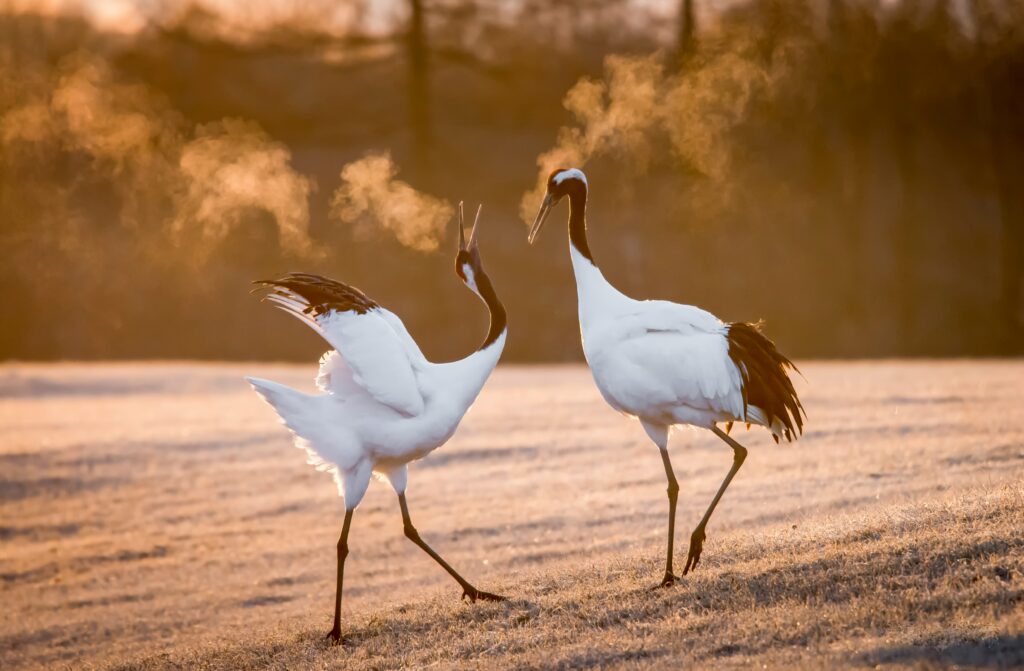
Whooping Crane The tallest of all North American bird species and one that can live over 30 years old in the wild, the whooping crane is a fascinating bird. It nearly went extinct in the 1940s, and there are still fewer than 1,000 individuals in the wild. Northeast Montana sits within one population’s migration path.
Black-footed Ferret Truly an anomaly, this ferret was thought to be extinct in 1996, before being rediscovered a decade later. Nearly its enitre diet is composed of prairie dogs. It has made a comeback but is among the least genetically diverse species in the world. There are only a few self-sustaining populations today, including in Wyoming. COVID testing was done on black-footed ferrets in 2020 due to concerns that the disease could wipe out the entire species. Since 2024, cloning has been performed on black-footed ferrets, with some success.
Pallid Sturgeon Native only to the Missouri River (including in Montana, where the headwaters of the river are found), the species is being maintained, perhaps solely, from hatcheries. Very little natural reproduction of the species occurs, and very few are left in the wild. Dams have affected the pallid sturgeon’s natural habitat, and the Yellowstone River has been examined as a place where the pallid sturgeon could be introduced with natural reproductive success.
Kootenai River White Sturgeon This sturgeon lives exclusively in Kootenay Lake and the Kootenai River, through a stretch of about 170 miles (about 274 km) from British Columbia, Canada, to Idaho and Montana. It’s estimated that the species declines by half every 7 years, and there may be fewer than 50 remaining by 2030.
Kendall Warm Springs Dace This is a very tiny fish. Adults only reach 2 inches (about 5 cm) in length. This fish is native only to the Kendall Warm Springs southeast of Yellowstone NP.
Other local endangered species include the Snake River sockeye salmon and the Wyoming toad.
After learning about endangered species wouldn’t it be nice to hear some success stories? Here’s a few creatures that were locally endangered and have recovered:
Bald Eagle You wouldn’t know it now, but there were points in the last century that people thought the symbol of America might not make it. Due to hunting in the early 20th century and dangerous pesticides in the mid-20th century, the bald eagle was going through it. Both were banned, and the bald eagle has made an incredible and rapid recovery.
Peregrine Falcon They have a very similar story to the bald eagle, being hugely affected by the pesticide, DDT, which would wash into rivers and lakes and be absorbed by fish, which were then eaten by birds. One problem was that DDT caused the birds’ egg shells to be too weak. After the EPA banned DDT in 1972, the peregrine falcon began to recover, and it is no longer classified as endangered.
Gray Wolf The last gray wolf in Yellowstone was killed by hunters in 1926. The species was nearly extinct in the US by the mid-1900s. Gray wolves from Canada were reintroduced to Yellowstone NP starting in 1995. Today the gray wolf is thriving across multiple states.
Bison Though never technically federally listed as endangered, bison were once nearly driven to extinction, only remaining in the wild inside Yellowstone NP, and still hold a global IUCN critically depleted status. However, political issues relating to cattle ranching have made government action to increase bison populations unpopular. Today, the surprise of seeing bison herds roaming in Yellowstone NP is part of what gives the park its charm.
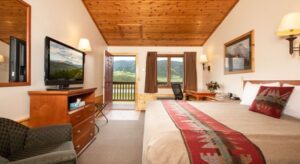
Book a trip to see the animals by staying at Flat Creek Inn. We love sharing sight-seeing and animal-spotting tips with our guests.
Growing up, Dillon could see the Grand Teton from his house on a clear day. His family took him to nearby national parks so often that he took the parks for granted. It took the rigors of life to teach him how good he had it, and he now spends as much time in the mountains as possible.
Photo by Sammy Wong on Unsplash