Every year or so, we do another spotlight on the wonderful wildflowers of Jackson Hole. You can read part 1 here and part 2 here. However, nature is surprisingly obliging to our blogging needs, so here are a few more wildflowers to keep an eye out for on your next trip to the Tetons.
Columbian Monkshood
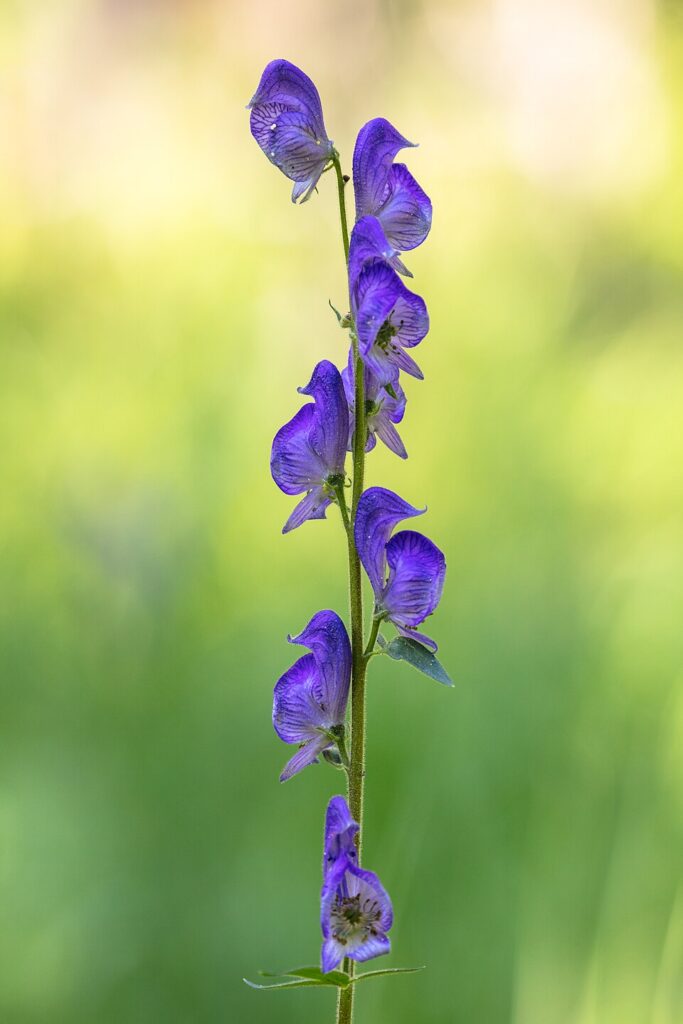
Aconitum columbianum
Appearance: A tall perennial with striking blue-to-violet flowers shaped like a monk’s hood. This is totally different from all the other tall purple flowers we've shown in previous years. The hood-like structure is formed by the flower’s sepals rather than its petals. We didn't know what sepals were either, so we had to look them up. They're small "mini-petals" (usually green) that hide underneath the petals.
Where to find it: Moist mountain meadows, streambanks, and other wet soils at higher elevations throughout the Rocky Mountains.
Fun fact: Columbian monkshood is extremely poisonous to both humans and livestock. So don't bake it into a pie or anything, okay?
Oneflower (Little Sunflower)

Helianthella uniflora
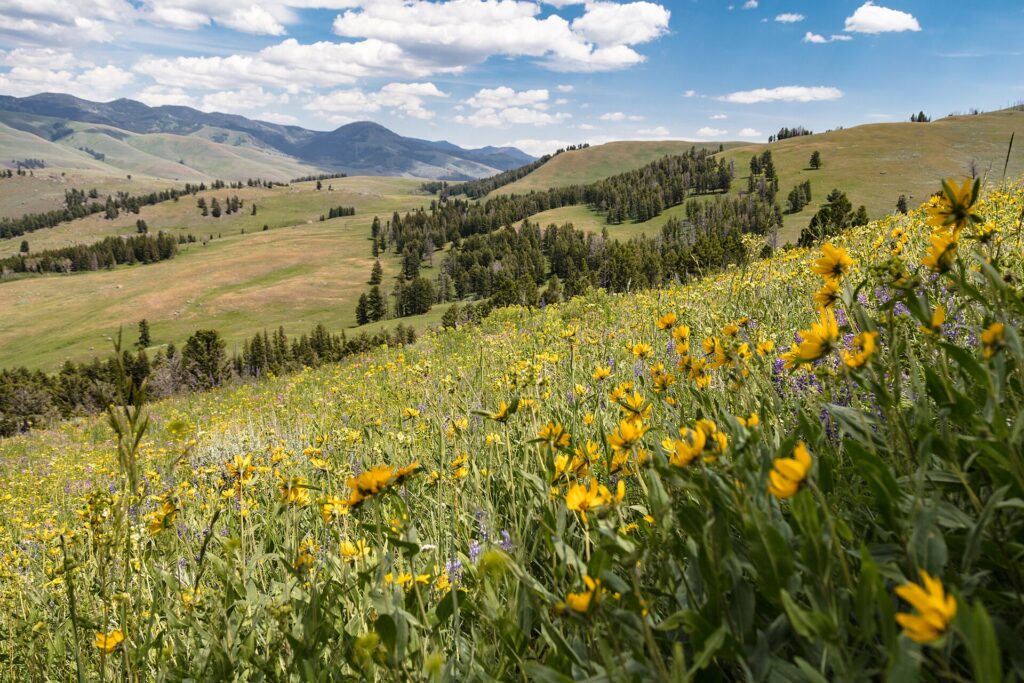
Appearance: An upright perennial growing 2–3 feet tall with a single yellow flower atop each stem, lance-shaped leaves, and a dark central disk. Or as its alternate name suggests, just look for the little sunflowers.
Where to find it: Open hillsides, sagebrush, mountain brush, aspen groves, and spruce-fir forests between roughly 3,900 and 10,500 feet.
Bloom season: June through August.
Fun fact: Its flowers are an important source of pollen for native bees.
Cowsnip (Common cowparsnip)

Heracleum maximum
Appearance: A robust native wildflower with broad, deeply lobed leaves and large umbrella-shaped clusters of tiny white flowers.
Where to find it: Moist meadows, streambanks, forest openings, and other damp habitats throughout Wyoming and much of North America.
Fun fact: Although native and beneficial to wildlife, the plant’s sap can cause skin irritation and increase sensitivity to sunlight in some people. (We don't know why you're rubbing sap all over yourself in the first place, but you do you.)
Green Gentian

Frasera speciosa
Appearance: A tall, unbranched flowering stalk bearing pale green flowers marked with purple spots. Plants may reach nearly 5 feet (1.5 m) or more in height.
Bloom season: Summer.
Fun fact: Green gentian spends many years growing as a leafy rosette before flowering just once in its lifetime. After producing seeds, the plant dies. It really says something about both the fragility of mortality and the beauty inherent in its transitory nature, doesn't it? Plus, it's kinda cool looking.
Silky Phacelia

Phacelia sericea
Appearance: Dense clusters of brilliant blue-to-purple flowers with long, protruding stamens rise above silvery, silky-haired leaves.
Where to find it: Forest openings, rocky slopes, alpine meadows, and areas above treeline throughout the mountains of western North America, including Wyoming.
Bloom season: June through August.
Fun fact: Its signature silkiness comes from the fine hairs that cover its leaves and stems.
This post was brought to you by Flat Creek Inn. Will we have more wildflowers to bring you next year? Stay tuned.