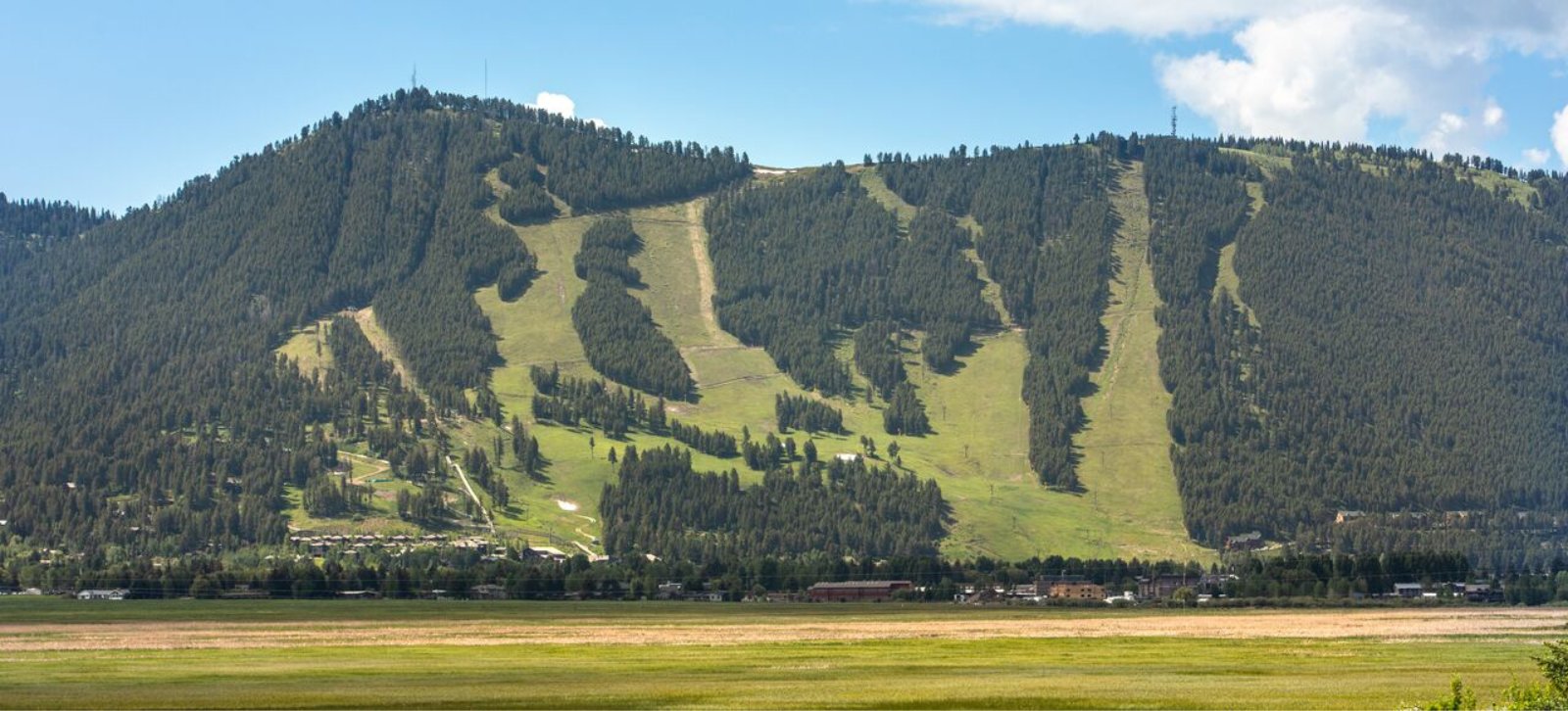
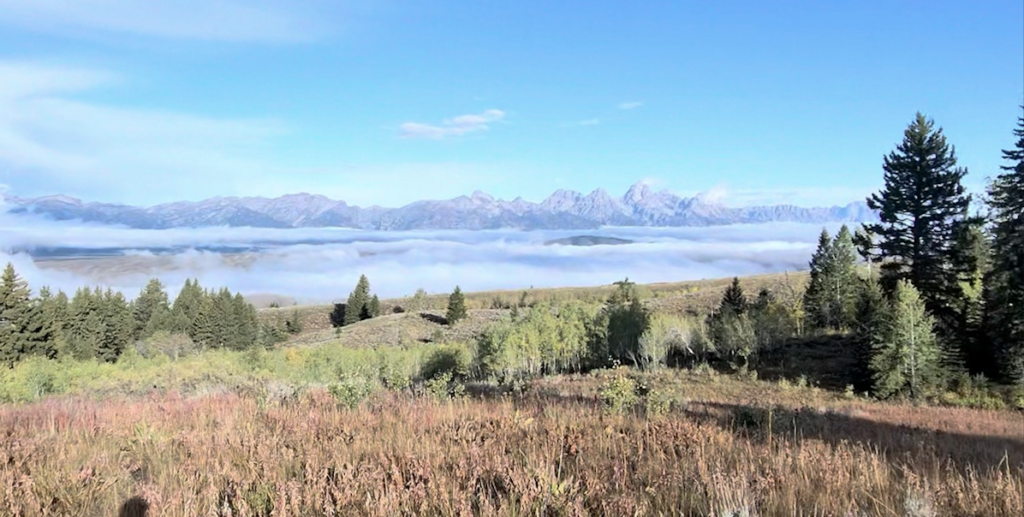
Can we share a little local secret? Come closer. Okay, too close. Yeah, right there. While the Tetons that dominate the western skyline are great and all, the Gros Ventre Range offers rugged beauty and a quieter backcountry experience that often gets overlooked. Take, for instance, a certain peak that rises above the eastern side of Jackson Hole. You know the one—it's called Sheep Mountain, but you can see the silhouette that inspired its familiar nickname, Sleeping Indian. The ridgeline resembles a person in a stereotypical Native American headdress lying on their back, with a forehead, nose, and chest. It's about 11,200 feet tall, and if you're ready for some burning quads, hiking Sheep Mountain rewards the effort. (We also wrote about it a few years back.)
What to Expect on the Hike
Hiking Sheep Mountain is a strenuous, full-day adventure for many hikers, though you can do it in about half a day if you're fast. You'll start at the end of a treacherous dirt road (bring a four-wheel-drive vehicle) and park in a small parking circle (it's too rough to be called a parking lot) at the base of the mountain. For exact directions, AllTrails is your friend.
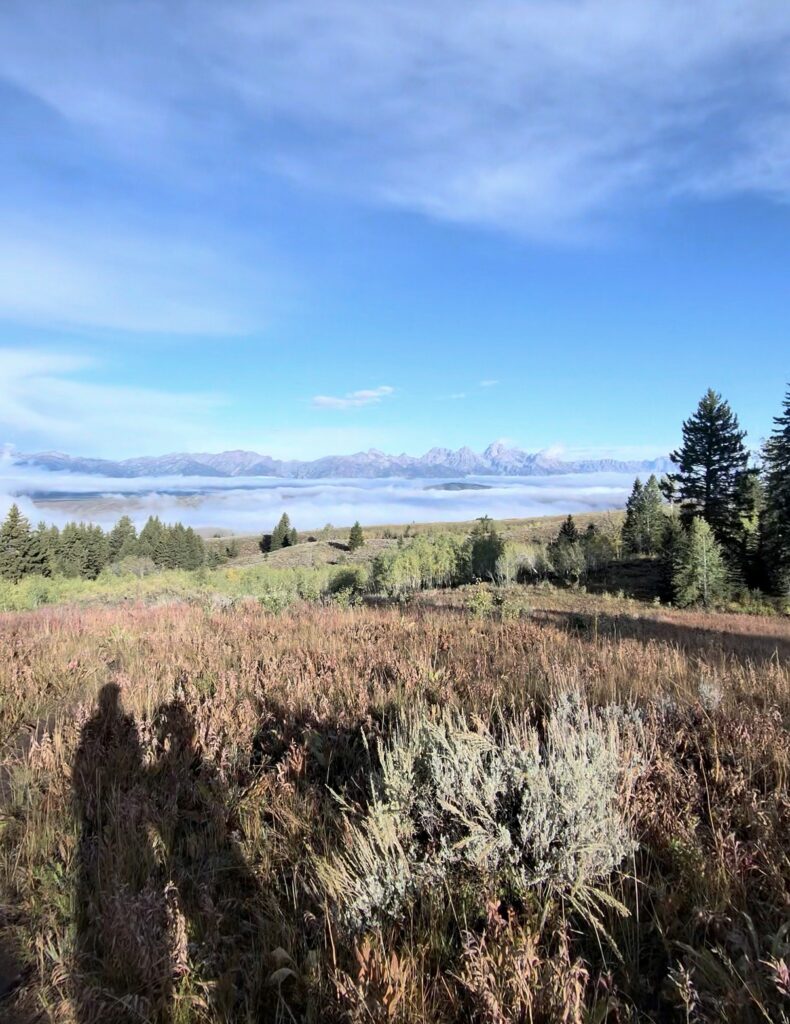
The first section, like pretty much every part of the trail, is steep. You'll likely wade through ankle- or knee-deep grass, so watch for stinging nettle and consider wearing long pants. A few miles up, you'll break through the treeline and cross a rocky meadow.
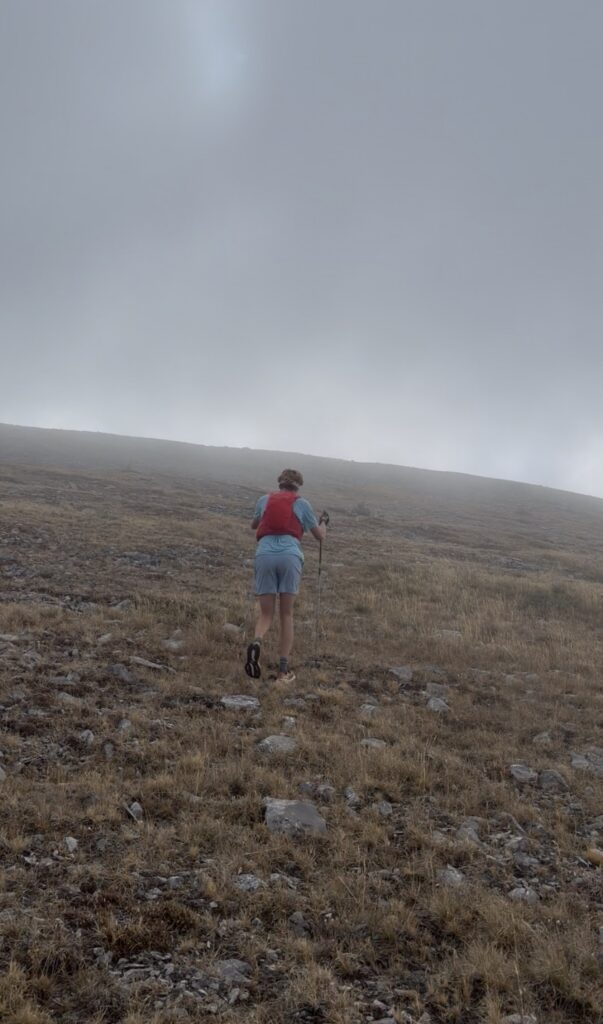
If you want an interesting side trip, you can stray from the trail and wander to your left, where you'll come across a small cross set in a cairn, with a few pieces of scrap metal stacked atop it. This is all that remains of a US Air Force C-130 cargo plane that crashed in 1996, killing nine people. The plane was transporting a car and other equipment after President Bill Clinton and his family had vacationed in Jackson Hole the previous week. You won't see much of the plane itself—given the sensitive nature of its plane's cargo, the wreckage was cleared up pretty fast. But it makes a nice place to catch your breath before continuing the final ascent.
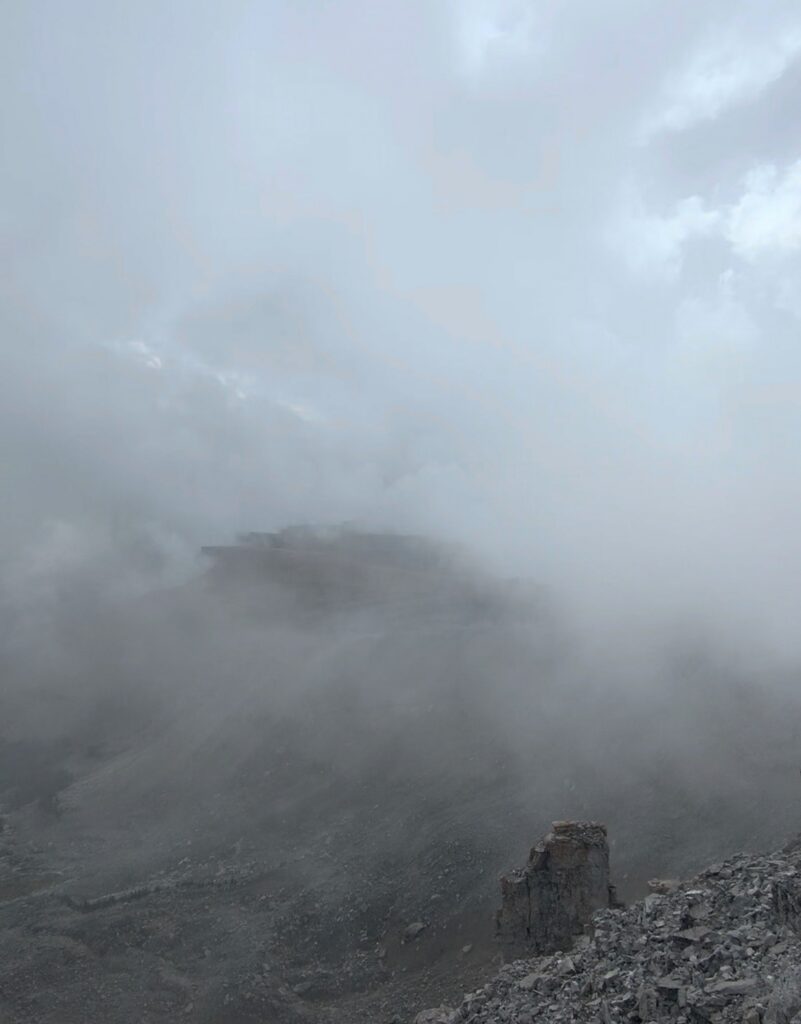
The last half mile or so to the top is rocky and—you guessed it—steep, but the view at the end is breathtaking as you take in sweeping views toward Grand Teton National Park, the National Elk Refuge, and miles of surrounding mountain country. Our latest ascent was mostly cloaked by mist, but that only added to the place's mystique.
Preparing for Sheep Mountain
You know this, but preparation is essential for a hike like Sheep Mountain. Bring plenty of water and food, first aid, navigation tools, and appropriate hiking gear. You'll be exposed for much of the hike, especially at the end, so pack layers and sun protection. Starting early is a good idea, particularly during summer when afternoon thunderstorms can develop quickly. Wildlife awareness is also important. Sheep Mountain lies within the Greater Yellowstone Ecosystem, so hikers should be prepared for wildlife encounters, including bears. Check current wildlife-safety recommendations, carry bear spray where appropriate, and know how to use it. Bell bells and other precautions are encouraged, and hiking alone is probably not a great idea.
As with any hike, be prepared to turn around if weather, trail conditions, wildlife activity, or fatigue make continuing unsafe. You can always retreat to enjoy the view another day.
When to Hike Sheep Mountain
Summer through early fall is generally the most practical season for hiking Sheep Mountain, depending on snow and trail conditions. Snow can linger at higher elevations well into the warmer months, and later summer often brings drier trails and longer days, while early fall offers cooler temperatures and changing colors throughout the valley. Overall, conditions in the mountains can change quickly, so always check the latest forecast and local conditions before heading out.
Make Flat Creek Inn Your Home Base
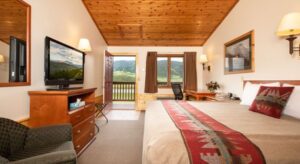
Given our recommendation that you start the hike early, Flat Creek Inn is close enough to ensure that you don't need to rise at 3 am. Then, after a long day in the mountains, we offer a comfortable place to return and relax. Located across from the National Elk Refuge and just north of downtown Jackson, our location provides convenient access to Grand Teton National Park, downtown Jackson, wildlife viewing, scenic drives, and hiking throughout the surrounding mountains.