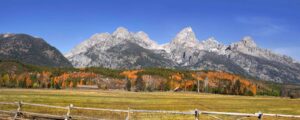
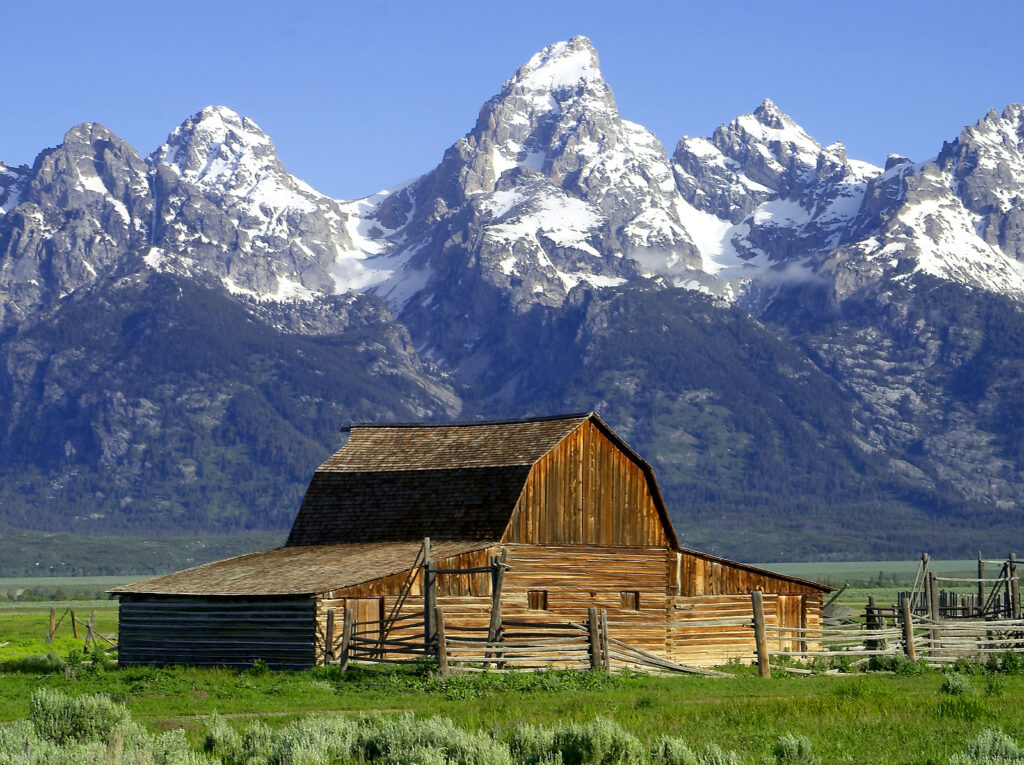
You’ve probably seen a picture of Mormon Row, even if you don’t know its name. It’s one of the most photographed spots in Grand Teton National Park: a cluster of picturesque barns against the majestic backdrop of the Tetons, the kind of thing that seems designed specifically for screensavers, wallpapers, and postcards.
But get this: the original settlers had none of those things in mind. Members of The Church of Jesus Christ of Latter-day Saints (aka Mormons) began settling the area east of Blacktail Butte in the 1890s. Drawn by the Homestead Act of 1862, which gave 160 acres of public western land to anyone who agreed to farm and live on it for five years, they came for fertile soil and a fresh start.
Likely sensing that future generations would never be able to pronounce “Gros Ventre” right, they first called the community Grovont. The nickname “Mormon Row” developed because the farms were built in the orderly line-village common to Latter-day Saint communities in the West, because the idea of building towns in a straight line rather than a slapdash smattering of houses was apparently a new one.
Despite the harsh conditions of the Wyoming frontier, the settlers grew crops by digging ditches by hand and with teams of horses, building an intricate network of levees and dikes. Fun fact: water still flows in some of these ditches.
The barns that make the area famous today are the John Moulton Barn (pictured above) and the T.A. Moulton Barn below, distinguished by the larger overhang on the roof.
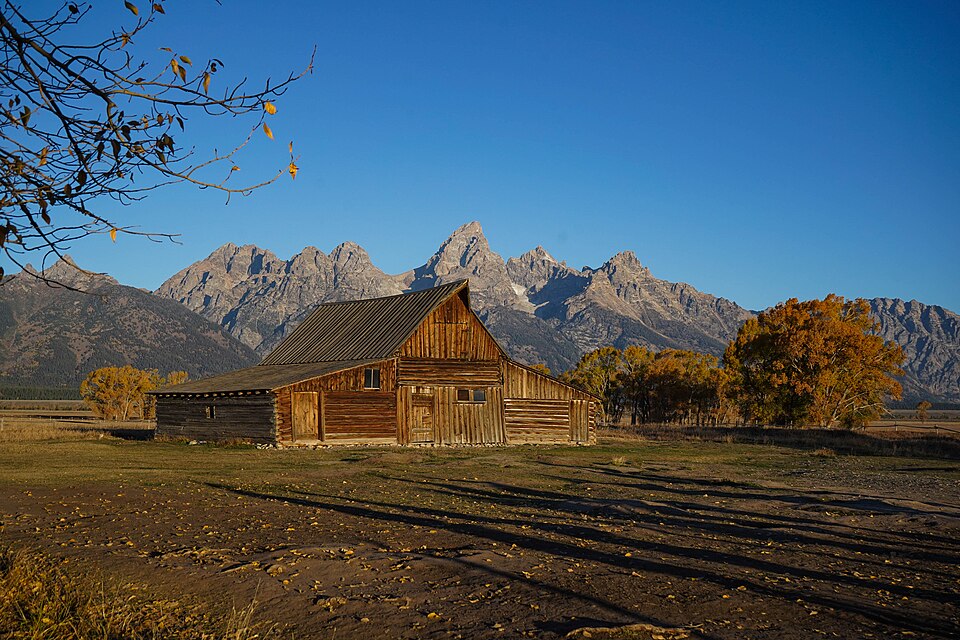
The barns were built by a pair of brothers on adjacent homesteads. Other surviving structures include the pink stucco homestead John built and the nearby Andy Chambers homestead. Andy Chambers came along a little after the Moultons, claiming land in 1912 and building a log cabin with a stable. In 1946, the family built a windmill to generate electricity, which still stands today.
The community thrived for a time, but after the expansion of Grand Teton National Park, most of the people still living on Mormon Row sold their lands to the National Park Service. There’s still a single score of privately owned land on Mormon Row, where the descendants of T. A. Moulton still live within sight of their ancestor’s iconic barn.
If ever you’re in the area, Mormon Row makes a great stopping point. Its Instagram-friendly nature aside, the site also happens to be one of the best-preserved pieces of Jackson Hole history. So take a few minutes to walk around, read the signs, and imagine what life looked like before the park welcomed millions of visitors every year. Maybe you’ll even make it into the background of someone else’s desktop wallpaper.
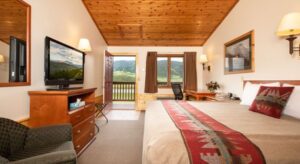
This post is brought to you by Flat Creek Inn.